
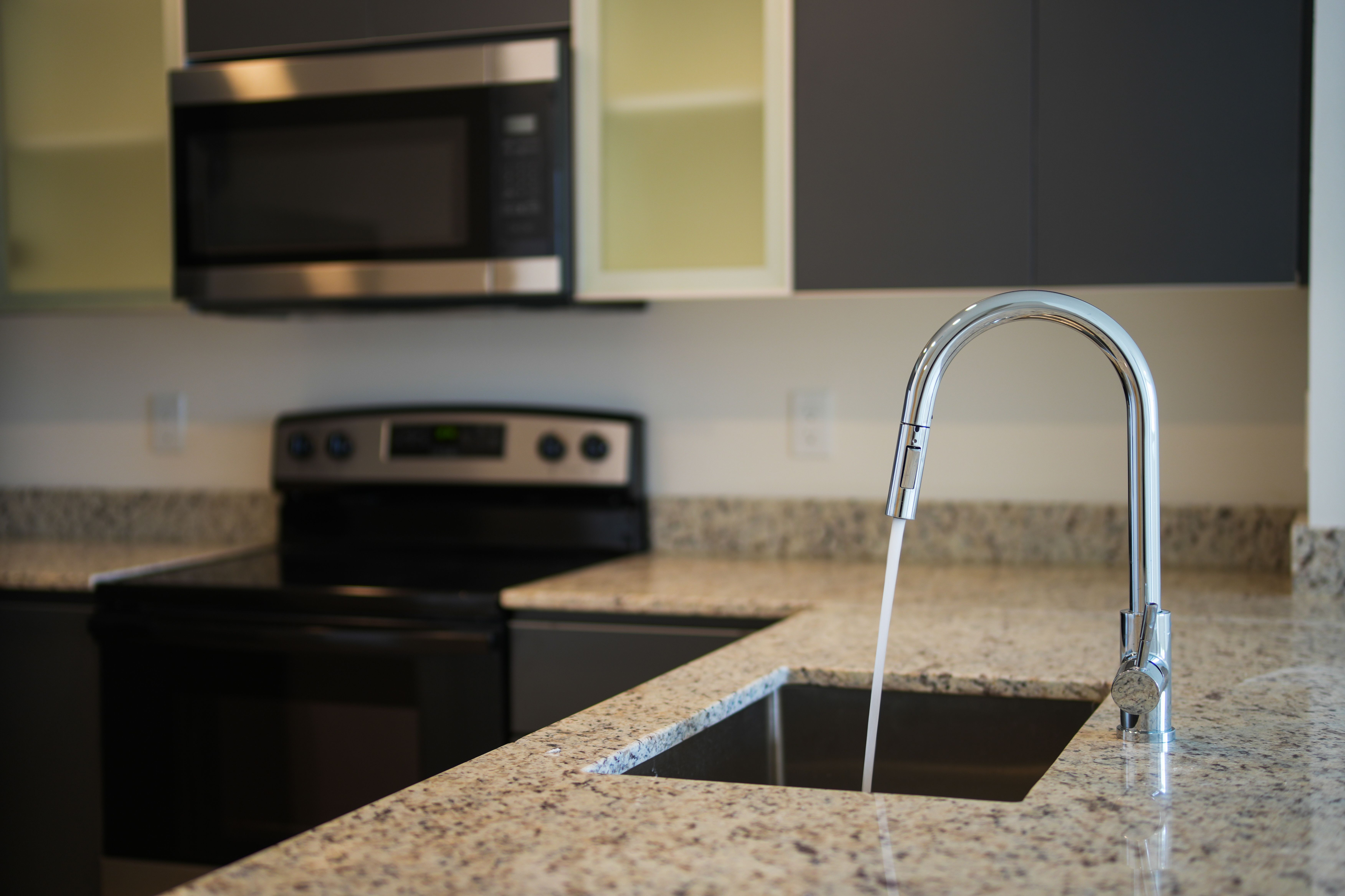
Quick Answer: Granite countertops and stainless steel appliances earn their keep in a rental because they survive daily cooking without looking beaten up. Granite countertops and stainless steel also tell you something useful about the community itself: the owner is reinvesting in units instead of patching worn laminate between residents.
Walk into two apartments with the same square footage and the same rent. The kitchen usually decides which one gets signed. Granite countertops and stainless steel appliances are the shorthand renters use for a unit that has actually been updated rather than repainted, and at Crestridge Apartments in Garland, Texas, that upgrade shows up in the surfaces you touch every single day.
What to Look For in Renovated Apartment Features
Renovated apartment features should hold up under real use, not just look good in a listing photo. The two that matter most in a kitchen are a countertop that shrugs off heat and knife nicks, and appliances built from a material that will not chip or yellow with age. Granite countertops and stainless steel cover both.
The Advantages of Granite Countertops Renters Notice First
Granite is quarried igneous rock. The EPA notes that its durability and decorative appearance made it a popular building material, and that granite is generally not very porous. That second detail is where the advantages of granite countertops turn up in ordinary kitchen moments. A hot pan set down without a trivet leaves nothing behind. A dropped can of soup dents the floor instead of the counter.
Laminate cannot promise that. Once the top layer bubbles or peels near a sink, the fix is replacement, and in a rental that often means living with the damage until turnover. Stone gives you a surface that outlasts several leases.
Stainless Steel and the Modern Apartment Kitchen
Stainless earned its place in the modern apartment kitchen by way of restaurants. Commercial kitchens run on it because it wipes down to bare metal and absorbs nothing. The FDA Food Code requires food-contact surfaces to be smooth, nonabsorbent and easily cleanable, which is the exact specification stainless was built around.
The efficiency side matters too. ENERGY STAR certified refrigerators run about 9 percent more efficiently than models meeting the federal minimum standard, and EPA figures put savings near $150 across a 12-year lifetime when an old unit gets recycled and replaced. A certified dishwasher costs roughly $50 a year to run and saves close to 5,800 gallons of water over its life, according to ENERGY STAR. Those numbers land on your utility bill, not the property's.
Are the Benefits of Granite Countertops Worth the Rent Difference?
Usually yes, though it depends on what you are comparing. The benefits of granite countertops are cumulative rather than dramatic. You get fewer permanent stains and no peeling edge strips, and the kitchen still reads as current in year five. Renovated units carry a premium over classic units in the same community, and published estimates of that gap swing widely by market and by unit condition, so treat any national average with some suspicion.
Here is how the two packages compare on the things renters actually ask about mid-tour.
| What You Are Comparing | Renovated Unit: Granite Countertops and Stainless Steel | Classic Unit: Laminate and Older Appliances |
|---|---|---|
| Heat tolerance | Hot cookware can sit directly on sealed stone | Hot pans can scorch or blister the surface layer |
| Everyday cleaning | Nonporous stone and smooth metal shed spills | Seams and edge strips trap grease and moisture |
| Damage repair | Small chips are often filled by maintenance | Bubbled or peeling sections need full replacement |
| Appliance efficiency | Newer packages often carry ENERGY STAR certification | Older equipment may predate current efficiency standards |
| Upkeep involved | Periodic sealing on stone, and fingerprints show on steel | Very little upkeep, but a shorter service life |
| Typical trade-off | Higher rent, finishes that age slowly | Lower rent, wear that shows within a lease term |
What Apartment Amenities Add Beyond the Kitchen
A kitchen upgrade rarely arrives alone. Apartment amenities tend to move on the same capital cycle, since owners funding interior work usually refresh shared spaces in the same budget year. Ask what else changed in that round. The photo tour is the fastest way to see which spaces have already been updated.
How Do Apartment Complex Renovations Actually Work?
Apartment complex renovations happen unit by unit, during vacancy. Counters cannot be torn out around a resident who lives there, so owners upgrade as leases expire. That scheduling reality is why a single community can advertise two different price points for the same floor plan, and why touring the specific unit matters more than touring the model.
Renters searching for granite countertop apartments online are usually filtering for exactly this situation: renovated inventory inside an established community, without paying new-construction pricing. Ask the leasing office which units are finished. Then check the available floor plans against what is renovated and ready right now.
Multifamily Countertops and Long-Term Durability
Multifamily countertops take abuse a private kitchen never sees, because every turnover brings a new cook with new habits. Stone handles that churn better than pressed board wearing a decorative layer. Owners have run the numbers, which is why granite and quartz dominate renovation specs even where laminate would cost a fraction as much. Stone counters were once reserved for luxury apartments and brand-new lease-ups. They have quietly become the baseline for renovated mid-market communities, which is good news if you would rather skip lease-up pricing.
Frequently Asked Questions
1. Are granite countertops safe? I read something about radon.
The EPA has addressed this directly. Radon rising from soil beneath a building is a far larger public health concern than radon from granite building materials, and any small amount released in a kitchen is typically diluted by normal ventilation. EPA recommends radon testing for every home regardless of countertop material.
2. Do granite countertops in an apartment need sealing?
Sealing is generally the property's responsibility, handled during turnover before you move in. Your part is simpler. Wipe spills reasonably soon and skip harsh acidic cleaners on the stone. Ask the leasing office how they schedule stone care so you know exactly what falls to maintenance.
3. How do I keep stainless steel appliances from showing fingerprints?
A few habits handle most of it:
- Wipe with the grain of the metal, never across it
- Use a soft microfiber cloth instead of paper towels
- Skip abrasive pads and bleach-based sprays
- Buff dry afterward so water spots do not set
4. Is a renovated unit better than a larger classic unit?
That depends on how you live. If you cook most nights, the updated kitchen wins on daily experience by a wide margin. If you need room for a home office or a second closet, square footage may matter more. Tour both, because listing photos flatten the difference.
5. Will my utility bill really drop with newer appliances?
Somewhat, though not dramatically. Certified refrigerators run roughly 9 percent more efficiently than the federal minimum, and a certified dishwasher costs around $50 a year to operate. Real savings, modest scale. Your total bill still hinges on thermostat habits, unit size and your electricity rate plan.
The Bottom Line on Granite Countertops and Stainless Steel
Granite countertops and stainless steel appliances are not by themselves a reason to sign a lease. They are a reliable signal that an owner is putting money back into the property rather than coasting on it, and you feel that decision every time you cook dinner. In Garland, where renovated and classic units often sit inside the same community, the gap is worth seeing in person before you commit. Tour the unit, run your hand across the counter, and start your application once you find the one that fits.